Not so fast, Facebook. Citing privacy concerns, two US-based watchdog groups file an FTC complaint hoping to block its planned $19 billion purchase of WhatsApp.
(Credit: CNET)
The proposed sale of WhatsApp to Facebook will violate the privacy expectations of WhatsApp's users, two privacy groups argued Thursday in a formal complaint to the Federal Trade Commission.
Filed by the Washington, D.C.-based Electronic Privacy Information Center and the Center for Digital Democracy, the "unfair and deceptive practices" complaint states that WhatsApp's privacy policy is incompatible with Facebook's. They request that the FTC "halt Facebook's proposed acquisition of WhatsApp" until the issues listed in the complaint are "adequately resolved."
In the complaint, the two organizations argue that Facebook has a history of violating users' privacy by changing the company's privacy policies; that many WhatsApp users are opposed to the merger; and that Facebook's policies toward privacy are incompatible with WhatsApp's "pro-privacy" stance.
EPIC stated on its Web site, "Our complaint urges the FTC to investigate whether there are sufficient privacy protections in place to continue to shield the data of WhatsApp users from access by Facebook -- which (for many users) was the very feature that made WhatsApp so appealing in the first place."
Facebook responded with an e-mailed statement to CNET that said, "As we have said repeatedly, Whatsapp will operate as a separate company and will honor its commitments to privacy and security."
The FTC did not respond to a request for comment. CNET will update the story when we hear back.
It's worth noting that until the FTC decides to respond, the complaint carries little legal weight. There has been no indication of how the FTC intends to respond at this point.
Historically, EPIC complaints to the FTC have not gone unheard, although there is much debate about the FTC's effectiveness in regulating privacy. In addition to the aforementioned consent decree that Facebook must operate under, the FTC has taken action against Google Buzz, Facebook's privacy settings changes, and Microsoft Passport. The FTC approved Google's purchase of DoubleClick despite an EPIC complaint, however.
The U.S. Federal Trade Commission should investigate Facebook’s proposed 19 billion acquisition of mobile messaging app WhatsApp—and possibly block it—because of the potential impact on users’ privacy, two privacy groups said in a complaint filed Thursday.
While WhatsApp has demonstrated a “strong commitment to user privacy,” Facebook’s current messaging service collects and stores “virtually all available user data,” the Electronic Privacy Information Center and the Center for Digital Democracy wrote in their complaint.
WhatsApp has promised users that it would not retain or sell personal information, and many users selected the service based on its privacy protections, but Facebook has collected user data from companies it acquires.
"WhatsApp users rely on WhatsApp to maintain the privacy of their communications,” Julia Horwitz, EPIC’s consumer protection counsel, said by email. “Our complaint urges the FTC to investigate whether there are sufficient privacy protections in place to continue to shield the data of WhatsApp users from access by Facebook—which (for many users) was the very feature that made WhatsApp so appealing in the first place.”
If Facebook begins collecting WhatsApp user data, that would be a deceptive business practice because of WhatsApp’s former privacy promises, the groups said. “WhatsApp’s failure to adequately disclose that this commitment to privacy was subject to reversal conditions” would violate FTC rules, the groups wrote.
If the FTC does not block Facebook’s acquisition of WhatsApp, it should “insulate” the app’s users from Facebook data collection, the groups said.
A Facebook spokeswoman said the acquisition won’t change WhatsApp’s privacy practices. “Facebook’s goal is to bring more connectivity and utility to the world by delivering core internet services efficiently and affordably — this partnership will help make that happen,” she said by email. “As we have said repeatedly, WhatsApp will operate as a separate company and will honor its commitments to privacy and security.”
Asus is reportedly working on a new 15 inch ultrabook with a 4K, Ultra HD display. It’s called theAsus Zenbook NX500 and the laptop reportedly an aluminum body, an anti-glare display, and Bang & Olufsen audio.
The Zenbook NX500 wouldn’t be the first 15 inch ultrabook from Asus. It’ll likely replace the aging Asus UX51 line of ultrabooks which have measly 1080p touchscreen screens and Intel Ivy Bridge processors.
Details about the new model are pretty scarce, but it seems likely the laptop will have an Intel Haswell CPU, and I wouldn’t rule out a discrete graphics card to help power the Ultra HD display (Intel’s integrated graphics could probably get the job done without any help, but Asus tends to charge premium prices for its 15 inch Zenbooks, so the new model will probably have the premium specs to match).
I’ve always been a bit wary of lumping 15 inch and large ultrathin notebooiks into the same category as smaller “ultrabooks,” when they can weigh as much as 5 pounds. But an Asus laptop thatmeasures less than an inch thick, weighs less than 5 pounds, and has a 4K display certainly sounds like something to keep an eye out for.
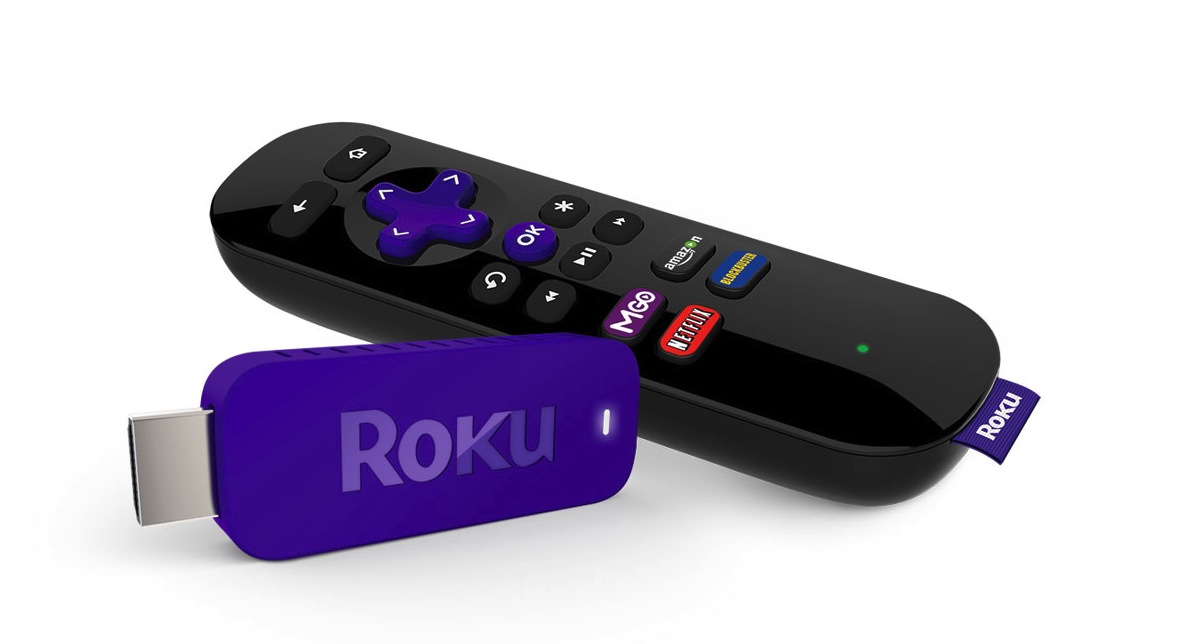
HDTVs rejoice! With the new Roku® Streaming Stick™ (HDMI® version) announced today, consumers with an HDMI port can now choose the compact stick design pioneered by Roku to stream their favorite entertainment. This new tiny player plugs discreetly into an HDMI port – perfect for those beautiful wall-mounted TVs – and packs the complete Roku streaming experience. That means access to 1,200+ channels of movies, TV episodes, music, news, sports, kids’ shows and free programming streamed in up to 1080p HD video, plus a TV user interface featuring the beloved Roku Search.
Roku is all about the easiest way to enjoy the best selection of streaming entertainment on TV. That’s why in addition to the included WiFi remote control for the entire household’s use, there are the free Roku apps for Android™ and iOS® devices for those who desire a mobile experience to browse and select content to stream. Users can also cast Netflix, YouTube and personal media from their devices to their TVs and additional mobile features such as the ability to cast content from a computer to the TV are on the way.
The new Roku Streaming Stick (HDMI version) is $49.99 and available for pre-order now fromAmazon.com, BestBuy.com, Target.com, Walmart.com and Roku.com. It will ship to consumers and arrive in retails stores in April.
Android and Chrome chief Sundar Pichai refutes reports that Google competed with Facebook to buy WhatsApp.
Sundar Pichai, Google's VP in charge of Android and Chrome.
(Credit: James Martin/CNET)
Google's Sundar Pichai has denied at Mobile World Congress that his company bid on WhatsApp, the popular mobile instant messaging and SMS app.
Pichai, senior vice president in charge of Chrome, Android, and apps, said in Barcelona this week that it was "simply untrue" that Google had offered to buy WhatsApp, reported the Telegraph.
An earlier report indicated that Google was outbid by Facebook for WhatsApp, which Mark Zuckerberg permanently friended for $19 billion. Google had reportedly offered $10 billion, according to Fortune.
Though there may not have been a formal bid from Google for WhatsApp to compete with the Facebook offer, that doesn't mean Google wasn't interested in WhatsApp. AppleInsider reported in 2013 that WhatsApp was asking Google for $1 billion, although WhatsAppdenied this. If those negotiations in fact did take place, they obviously fell through.
Another report indicated that Google CEO Larry Page met with WhatsApp co-founder and CEO Jan Koum in an attempt to convince him not to hook up with Zuckerberg.
Building custom user interfaces is something our iOS development team encounters on a daily basis. Anything you can do to make it faster to develop or make your reusable controls easily customizable is an easy victory. UIAppearance gives you this easy victory.
While UIAppearance isn’t a brand new topic, it seems to get less love than it should. UIAppearance is a protocol available since iOS 5 that allows a developer to quickly configure the appearance of user interface controls provided by Apple. The fact that that your custom controls can take part in UIAppearance is talked about even less. This post will cover the basics of using UIAppearance and will explore adding support to your custom interface components.
UIAppearance Basics
You’ll be glad to know that UIAppearance is a straightforward API with almost no learning curve. To use it you need only know three things.
Properties and methods exposed to UIAppearance are decorated with the UI_APPEARANCE_SELECTOR attribute.
The class method +[UIControl appearance] will set the UIAppearance system to apply the specified properties when the control is created.
The class method +[UIControl appearanceWhenContainedIn:] will set the UIAppearance system to apply the specified properties when the control is created, but only when it is created in the specified containers.
That is all there is to it. UI_APPEARANCE_SELECTOR, + appearance, + appearanceWhenContainedIn:
Adding some style to UINavigationBar
Let’s see how this works. Say you want to style your UINavigationBar to be something a little different than the standard iOS style. First, look at the header file for UINavigationBar (you can find this by right-clicking on the symbol and choosing ‘Jump to Definition’ on it in Xcode).
Search for UI_APPEARANCE_SELECTOR. You’ll see it attached to many of the properties and methods, but not all. This is your guide to what is available byUIAppearance. In our case, the first time we see the attribute is with:
This means that the tintColor property is available for UIAppearance. This means I can now apply a global style affecting the tint to all UINavigationBar objects by telling the appearance proxy:
You’ve now told it to only apply the red tint color when a UINavigationBar is displayed inside a YOURCustomViewController. However, if I add a UINavigationBarto another view controller, it will not be tinted red. Only in the case that an instance of a UINavigationBar is in the hierarchy below an instance of aYOURCustomViewController will it be tinted red. Still classy.
All of these appearance styles can be applied as early as you like in your application. For example, you can set all your styles in -[UIApplicationDelegate application:didFinishLaunchingWithOptions:].
Supporting different iOS versions
As can often occur when working with any API, certain versions of can provide different functionality. How can we build an application level style when the available methods and properties on Apple’s controls are changing?
Thankfully, Objective-C is a dynamic language that allows runtime introspection on your objects. In a similar style to how you would ask your object if it -respondsToSelector:, you can ask a class if it’s instances respond to a method as well.
The shadowImage property is new to iOS 6. Using +[NSObject instancesRespondToSelector:, we can inspect whether any instance of an object of this type will respond to this selector. Since you’ll be using the class type to apply an appearance, not an instance, this class method will tell you if this property can be used.
Using UIAppearance in your custom UI views
As stated earlier, you too can take advantage of UIAppearance in your custom views. Following the same pattern as seen above, let’s create a UIButton subclass that provides a property through UIAppearance.
I want to expose the font of the label on a UIButton. After subclassing, I’ll create a property that is decorated with `UI_APPEARANCE_SELECTOR calledtitleFont.
"Agile Development" is an umbrella term for several iterative and incremental software development methodologies. The most popular agile methodologies include Extreme Programming (XP), Scrum, Crystal, Dynamic Systems Development Method (DSDM), Lean Development, and Feature-Driven Development (FDD).
While each of the agile methods is unique in its specific approach, they all share a common vision and core values (see the Agile Manifesto). They all fundamentally incorporate iteration and the continuous feedback that it provides to successively refine and deliver a software system. They all involve continuous planning, continuous testing, continuous integration, and other forms of continuous evolution of both the project and the software. They are all lightweight, especially compared to traditional waterfall-style processes, and inherently adaptable. What is more important about agile methods is that they all focus on empowering people to collaborate and make decisions together quickly and effectively.
The Evolution of Agile Development
Many of the individual principles and practices that are promoted by agile development have been around for years, even decades. As opposed to implementing these best practices piecemeal, agile methodologies have "packaged" various customer, management, and in some cases, engineering practices and principles together in a way that helps guide teams through the process of rapidly planning and delivering working, tested software. Each of the agile methodologies combines both old and new ideas into refinements that are certainly greater than the sums of their parts.
While it is true that many of the practices associated with agile development have been around for quite some time, the average software development team has yet to embrace many of the principles and practices. Even today, the average software team does not iterate, does not deliver software incrementally, and does not practice continuous planning nor automate testing. Now that these practices have been combined in a manner that can more easily be understood and adopted, the trend appears to be rapidly changing for the better, especially during the last several years.
As with any new way of doing business though, Agile methods have generated quite a bit of controversy within the software community. Yet since their emergence, in project after project, they have continued to deliver higher quality software systems in less time than traditional processes. If you are a software development professional, you definitely owe it to yourself to become familiar with the theory and practice of agile development. Hopefully the information presented on this site can assist you in learning what agile is all about.

 (Credit: CNET)