Showing posts with label Apple. Show all posts

Thursday, September 11, 2014

How Does Apple’s iPhone 6 Stack Up Against the Galaxy S5, HTC One M8, and Moto X?

How Does Apple’s iPhone 6 Stack Up Against the Galaxy S5, HTC One M8, and Moto X?
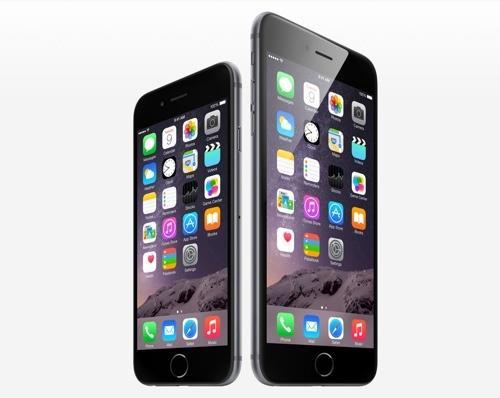
Apple’s iPhone 6 and its new iPhone 6 Plus are officially here, and both are bigger and — if you believe Apple CEO Tim Cook — better than any smartphone in the company’s history.
As we now know, the iPhone 6 is available in two different sizes: a generous 4.7 inches and a massive 5.5 inches. That makes them both significantly larger than the 4.0-inch iPhone 5s.
And with enhancements including a high-resolution screen, an improved camera, and mobile payment capabilities, the iPhone 6 is a serious contender for best smartphone on the market.
But there’s plenty of competition from companies like Samsung, HTC, and Motorola. To see how the iPhone 6 stacks up, we’ve compared it with Samsung’s Galaxy S5 and Galaxy Note 4HTC’s One M8, andMotorola’s Moto X in a free-for-all smackdown of smartphone superpowers.
How does Apple’s latest handset compare? Let’s take a look.
ScreensThe iPhone 6 and iPhone 6 Plus have an unfair advantage in this category, in that they come in two sizes, 4.7 inches and 5.5 inches.
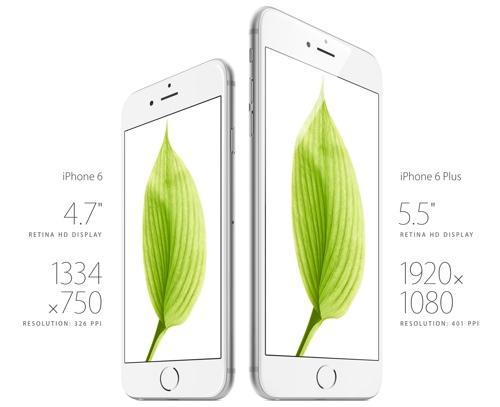
iPhone 6 and iPhone 6 Plus
It’s a smart decision, though, as Apple can appeal to both consumers who couldn’t care less about owning a massive smartphone and those who are hungry for more screen real estate.
Apple’s displays also use the company’s new Retina HD technology. That means the 4.7-inch iPhone 6’s screen resolution clocks in at 1334 × 750, while the iPhone 6 Plus’s resolution tops out at 1920 × 1080.
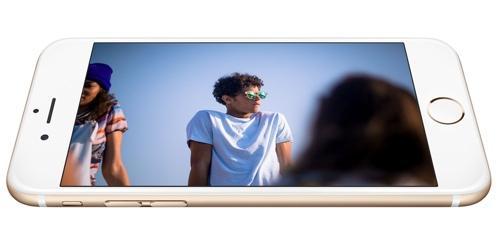
iPhone 6 screen
The Galaxy S5, on the other hand, sports a 5.1-inch 1080p display, putting it smack dab in the middle of Apple’s two new iPhones in terms of size. It’s worth noting that the S5’s display is easily one of the most beautiful around, thanks to its active-matrix organic light-emitting diode (AMOLED) display.
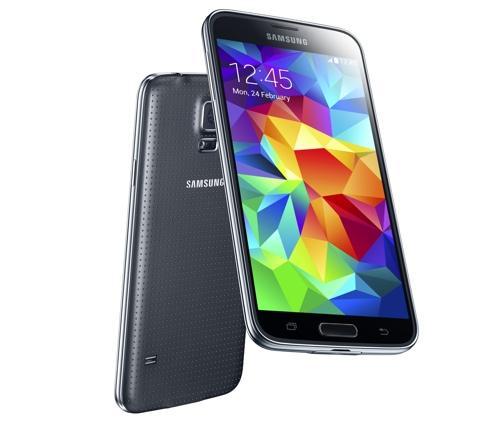
Samsung Galaxy S5
Samsung’s 5.7-inch Galaxy Note 4, meanwhile, aims at consumers who want a phone that’s more like a tablet. (We refuse to call it a “phablet.”) The HTC One M8 and Moto X both sport 5-inch 1080p screens. If you’re judging based on display perfection, in other words, Apple or Samsung look like your best bets.
Apple’s iPhones have long been known for their impressive displays and incredible color accuracy. If the iPhone 6s’s Retina HD screens are anything like Apple’s previous iPhone displays, the iPhone 6 and iPhone 6 Plus may have this category sewn up.
Advantage: Apple iPhone 6 and iPhone 6 Plus
DesignBigger screens naturally mean bigger phones. To keep the iPhone 6 and iPhone 6 Plus from overtaking your pockets, Apple has made both of its new handsets thinner than the iPhone 5s.
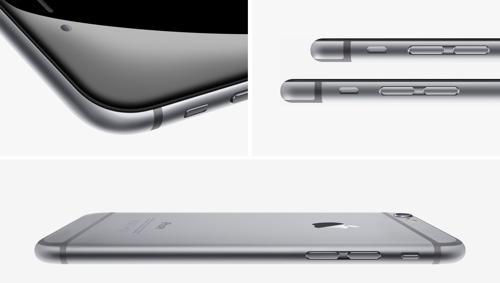
Comparison of smartphone widths
The iPhone 6 measures just 0.27 inches thick, while the 5.5-inch iPhone 6 Plus clocks in at 0.28 inches; both are slimmer than the 0.30-inch iPhone 5s, as well as any of the Android handsets in our competition.
The Samsung Galaxy S5, for example, measures 0.32 inches, while the Note 4 measures 0.34 inches. HTC’s One M8 is 0.37 inches thick, and Motorola’s Moto X is 0.39 inches at its thickest.
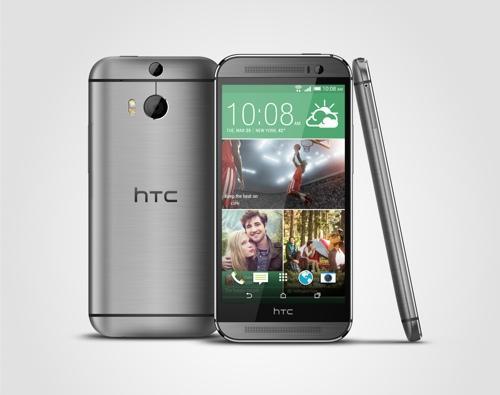
HTC One M8
The iPhone 6 comes wrapped in a rounded aluminum body that looks somewhat similar in design to the all-metal HTC One M8. Unlike the One M8, however, the iPhone 6 doesn’t have a curved hump along its back panel.
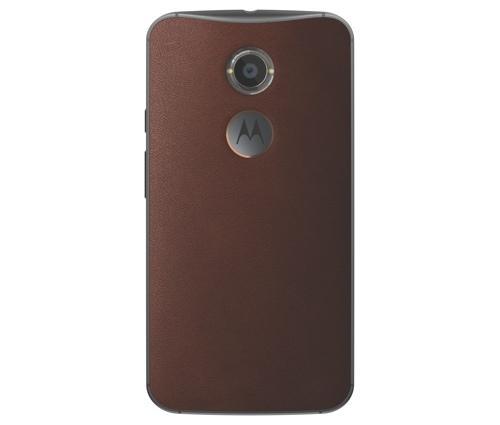
Moto X smartphone
Samsung’s Galaxy S5 sports a plastic chassis, while the Note 4 features a metal frame and plastic back panel. Likewise, the Moto X includes an aluminum frame and a customizable rear plate that can be had in plastic, wood, or even leather.
Apple’s iPhone 6 and iPhone 6 Plus may be unbelievably thin and sleek, but Motorola’s Moto X offers some impressive customization options. Of course, we’ll have to wait until we see the iPhone 6 up close before we give this category to the Moto.
Advantage: Motorola Moto X
CameraApple’s iPhone 6 and iPhone 6 Plus come with the same iSight 8-megapixel camera found on the iPhone 5s. But Apple has made some major improvements to the new cameras with its new iSight sensor with faster autofocus.
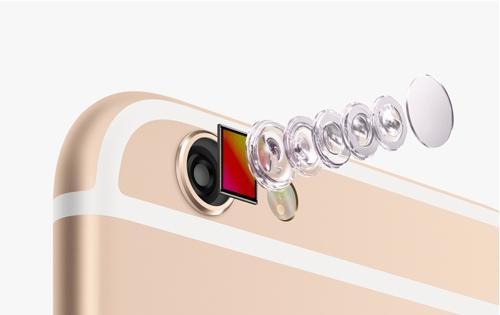
iPhone 6 camera
The iPhone 6 comes with digital image stabilization, while the iPhone 6 Plus has optical image stabilization (OIS). Digital stabilization uses software to compensate for camera movement when taking a photo, while optical stabilization physically moves the lens as you shoot to ensure a clear picture. (In other words, optical is better.) The cameras also offer slow-motion capabilities and better face detection.
Samsung’s Galaxy S5 and Galaxy Note 4 both pack 16-megapixel cameras with real-time high dynamic range (HDR), which combines two exposure levels to improve overall image brightness and quality. Both phones let you see how a photo would look when taken with HDR on before you actually capture it. The Note 4 also gets optical stabilization, though the S5 doesn’t.
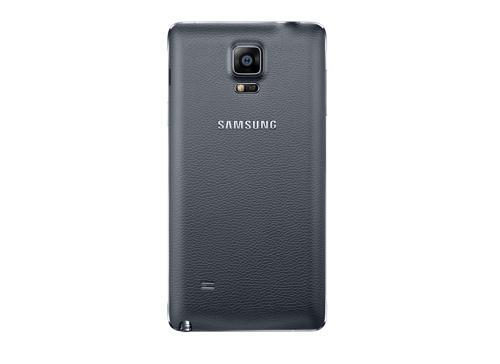
Samsung Note 4 phone
The HTC One M8’s camera uses HTC’s own UltraPixel technology, which translates to about 4 megapixels. Motorola’s Moto X, on the other hand, uses an 13-megapixel camera.
Apple’s iSight camera has been the gold standard for smartphone cameras, and with the iPhone 6 and iPhone 6 Plus offering enhanced versions of the iSight, Apple should take this category with ease.
Advantage: Apple iPhone 6 and iPhone 6 Plus
SoftwareThe iPhone 6 runs Apple’s new iOS 8 operating system, which offers serious improvements over its predecessor, iOS 7. In addition to new notifications and the ability to communicate with your OS X Yosemite-compatible MacBook and Mac, iOS 8 includes Apple’s new HealthKit and HomeKit services.
iPhones displaying HealthKit and HomeKit apps
HealthKit pulls together all your health information from your disparate fitness apps and presents it to you in one convenient location. HomeKit lets you control and monitor your iOS-compatible smart-home devices.
The Samsung Galaxy S5 and Note 5 both run on Google’s Android KitKat but add Samsung’s own customizable (and often overbearing) TouchWiz interface to the mix. Similarly, HTC uses Android KitKat but puts its Sense UI over it. The Moto X, on the other hand, runs a pure version of Android KitKat, ensuring that your experience is exactly what Google intended.
We’ve only seen beta versions of Apple’s iOS 8, though it certainly has some excellent offerings. But Motorola’s pure Android experience is impressive in its own right. For now, this category is up for grabs.
Advantage: Tie
Mobile walletsApple’s iPhone 6 and iPhone 6 Plus are the company’s first devices to use a near-field communication (NFC) chip. The feature allows iPhone fans to make wireless payments via Apple’s new Apple Pay service at participating stores’ checkout counters.
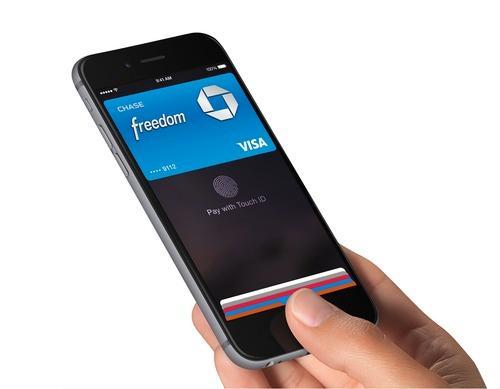
iPhone displaying a banking app
Nothing new here. NFC has been a major part of the Android ecosystem for a while now, allowing users to trade photos, apps, and websites by tapping their phones together. Google also has its own mobile payment system, the appropriately named Google Wallet, that’s compatible with most Android smartphones.
NFC has been available in Android smartphones for quite some time but hasn’t quite taken off. Many analysts say the only way NFC wireless payments would gain traction was with Apple’s help. And now that the iPhone 6 and iPhone 6 Plus have it, our smartphones could finally replace our wallets. But in terms of mobile payment capabilities, this one’s a wash.
Advantage: Tie
Fitness trackingThe iPhone 6 and iPhone 6 Plus come loaded with Apple’s new M8 processor, which can measure how many steps you’ve taken and how far you’ve run, whereas its built-in barometer can detect how high you’ve climbed. Those sensors are tied into iOS 8’s new HealthKit features.
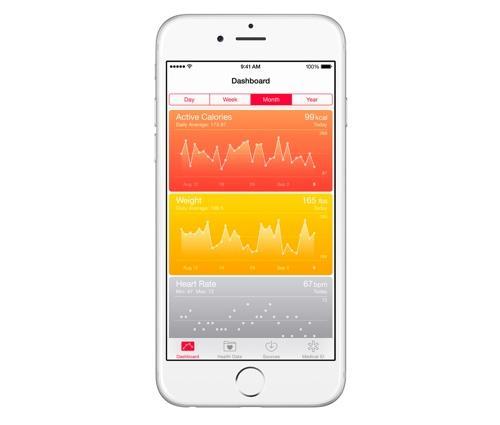
image
Samsung’s Galaxy S5 and Note 4 both offer the company’s S Health app and built-in pedometers and heart-rate monitors. HTC’s One M8 and the Moto X don’t offer any built-in health features, though you can download third-party apps for the handsets.
The iPhone 6’s built-in pedometer and barometer, paired with its ability to pull in all the information from your various health apps, give this category to Apple — no sweat.
Advantage: Apple iPhone 6 and iPhone 6 Plus
Battery lifeTo power the new, larger iPhone 6 and iPhone 6 Plus, Apple has bumped up the size of its phones’ batteries, which should theoretically allow them to run all day without running out of juice. Both the Galaxy S5 and HTC One M8 offer equally powerful batteries, however, that last throughout the day and then some.
The Moto X’s battery will get you through most of the day as well. We haven’t been able to test the Note 4’s battery just yet, as the phone is still unavailable.
The Galaxy S5 offers one of the longest-lasting batteries of any smartphone on the market. Apple says the iPhone 6 will have a longer-lasting battery, and the Note 4 is also sure to have a serious power plant, but based on current numbers, the Galaxy S5 is the winner here.
Advantage: Samsung Galaxy S5

Wednesday, September 10, 2014

Apple Watch: the good, the bad, the unexpected, the question marks

After months and months of speculations, Apple Watch is out. Analysis, discussions, and speculations will go on till the product will be eventually available and reviewed in early 2015. Here are my first thoughts on the announcement.

The Good 
design: Apple understood much more than other companies how much personalization and design variation is an intrinsic element of a watch, introducing 3 ranges (Watch, Watch Sport, Watch Edition), 2 sizes (38 and 42mm), a large amount of bands of different materials to match the models, and a set of beautifully designed virtual watch faces. Surely not enough to cover all the variety of existing watches, but way better than what done to date by competitors.

interface: the addition of the digital dial (albeit as usual a way too fancy name) and the possibility to detect taps vs pressing against the screen make a very good combination. The UI with the "universe" of icons representing the different apps seems also pretty intuitive, and the possibility for 3rd party app developers to create new apps makes it a very versatile device. Also the attention paid to the design of the watch faces is great to see, with simple ways to personalized colors and information displayed, once again confirming that Apple understood that a watch is all about design.

sensors: the focus on health is clear and was stressed by Time Cook. Little was revealed in terms of specs, but from the large openings on the back, and the fitness app mentioned, it seems clear Apple Watch should be able to measure accurately heart rate also during movement (one of the pain points of most other smart watches).


The bad
- GPS (lack of): no integrated GPS, so no way to keep track of distance and path traveled when running without an iPhone: Similarly, it was not clear if the barometer, introduced in the M8 processor of iPhone 6, which allows to measure altitude, is also embedded on the Apple Watch. A lack of of it would imply a person would have to always carry an iPhone 6 when going running to keep track of the altitude traveled.

The unexpected
taptic engine: the addition of the "taptic engine" allowing to both sense pressure from the screen, and recreate the feeling of a tap is unexpected yet perfectly meaningful. It allows to notify the user in a much less noticeable and disturbing way than the more common buzz of vibration, effectively a similar feeling to someone tapping your wrist. And it also open the door for the more futuristic 1-to-1 communication in which a user can feel taps from the person he or she is communicating with. Very romantic indeed and surely opening a new space for developers to create new forms of more personal interaction.

The unknown
battery life: no mention of the battery life was done, most likely as Apple engineers are still working hard to improve and refine the system. Consumers' feedback has been very clear on the news of a 1 day battery for the Moto 360, making it the single most criticized characteristics of the smart-watch. Obviously the same counts for Apple. Furthermore, one of the fundamental aspects of health is the quality of sleep. For a device which is clearly able to monitor sleep status, a battery lasting less than 2 to 3 days would imply the watch would spend most of the nights resting on the charging base, making sleep monitoring not possible. Battery life remains therefore the big question mark, and possibly one of the reason of the delay in the launch.

Apple’s Announcements Are a Huge Deal for Marketers

Another Apple launch event, another batch of surprises that aren’t that surprising. There’s been buzz about Apple launching a watch, mobile payments, and a larger iPhone for months. Now, the rumours have all turned out to be true! We hope you paid attention, because Apple just flipped the script for marketers everywhere (again). Here are the big changes that are already impacting your business:

Mobile Payments Are Becoming a Thing

Yes, the Apple Watch is really cool, and you can get one made out of solid gold or 
whatever. But the biggest announcement Apple made was one that most consumers probably glided right over. Apple Pay represents a huge leap forward for mobile payments and digital wallets.
Mobile payment isn’t new. It’s been a feature of Android phones since 2011. But Apple might finally make them mainstream.
Widespread mobile payment could be a massive development for marketers. If you are able to connect customers’ phones to their transactions, then you can connect their behavior online to their behavior in-store. This is the Holy Grail. Brands will be able to provide a truly seamless customer experience. You could walk into a store, be greeted by name, get more information from a human being on the same products you were looking at online, then purchase it with a wave of your phone. However, this won’t happen right away.
To ensure that people aren’t put-off by Apple Pay, the tech giant has stressed its security. Eddy Cue, Apple’s SVP of Internet Software and Services, announced that Apple would not collect any purchase history or information through its system. Everything is encrypted, which should make using Apple Pay even safer than using a debit card.
This cuts both ways for marketers. On one hand, the heightened security and ease of Apple Pay will definitely encourage wider adoption. However, it also won’t provide all the purchase data they want and need. I think it’s a worthwhile tradeoff, at least for now. Once mobile payment reaches saturation, that’s when marketers really need to sync up their experiences. Regardless, if consumers become more comfortable paying with their phones, brands need to provide them with every opportunity to do so.

A Wearable Future

Again, we’ve had FitBit and Jawbone for a while, but the Apple Watch represents a mainstream acceptance of the wearable movement.
Like Apple Pay, information from HealthKit won’t get shared with marketers willy-nilly. But if consumers decide to share it, it would be revolutionary for the fitness, sportswear, and healthcare fields. Your personal trainer could provide feedback on your routine, and you’d never need to go to the gym. A sales associate could recommend shoes based on how often and how hard you run. Your doctor could even get a full readout of your heart rate.
Unlike the two examples I mentioned above, the Watch is not a fitness-centric device. Yet, it has all the same capabilities. It’s a fashion accessory that just happens to let you measure huge amounts of biometric data, if that’s what you’re into. Instead of going out and buying something specifically to tell them how many steps they walked and hours they slept, Apple Watch owners will have that info right on their wrists. This means the challenge now is for companies to come up with apps that leverage this data in useful, interesting ways, rather than convincing consumers to start measuring in the first place.

iBeacons Will Make Location-Based Marketing a Reality

I want to stress: this is hearsay. However, I’ve heard two rumors already. Right now, Apple are upgrading the iBeacons in their stores to provide more accurate location-based offers to customers. The rumor is that they’re going to be providing more accurate, in-house designed iBeacon sensors to retailers. This will help authenticate Apple Pay, but also provides unprecedented information on iPhone owners’ exact location within a store.
That could mean that, if you linger by a new bag in Macy’s, your Apple Watch might tap you and present an offer to take 20% off. Then you just need to walk up to the register, hold out your wrist, and waltz on out with your sweet new purchase. However, the Minority Report world of constant, personalized in-store offers might soon be upon us. What it looks like, and whether consumers will embrace it, are two huge questions we’ll have answers to soon.

Bigger Phones, Fewer Desktops

Mobile internet usage is rapidly tipping towards becoming the norm, rather than the exception. More and more-comfortable mobile experiences are what’s going to diminish customers’ time on desktop. As Ad Age reports, “Bigger phones are increasingly popular, particularly in Asia, where consumers often have one internet-connected device.” Every company is going to need to deliver a richer, more responsive mobile experience. It’s clear: customers aren’t rushing back to their desktops anytime soon.
With this event, Apple have cemented themselves as tech trend decision-makers. They weren’t the first to come up with wearables or mobile payments, but they may have perfected them. Like smartphones, once Apple runs with a product, marketers (and everyone else) have to try to keep up.

Monday, March 31, 2014

Highest Rated CEOs 2014 [by GlassDoor.com]

  1. 1Jeff Weiner

    Jeff Weiner

    100% Approve

    LinkedIn

  2. 2Alan R. Mulally

    Alan R. Mulally

    97% Approve

    Ford Motor

  3. 3Richard W. Edelman

    Richard W. Edelman

    97% Approve

    Edelman

  4. 4John E. Schlifske

    John E. Schlifske

    95% Approve

    Northwestern Mutual

  5. 5Paul E. Jacobs

    Paul E. Jacobs

    95% Approve

    Qualcomm

  6. 6Craig Jelinek

    Craig Jelinek

    95% Approve

    Costco Wholesale

  7. 7Brad Smith

    Brad Smith

    94% Approve

    Intuit

  8. 8Lloyd C. Blankfein

    Lloyd C. Blankfein

    94% Approve

    Goldman Sachs

  9. 9Howard D. Schultz

    Howard D. Schultz

    93% Approve

    Starbucks

  10. 10Mark Zuckerberg

    Mark Zuckerberg

    93% Approve

    Facebook

  11. 11Larry Page

    Larry Page

    93% Approve

    Google

  12. 12Richard K. Davis

    Richard K. Davis

    93% Approve

    U.S. Bank

  13. 13Marc Benioff

    Marc Benioff

    93% Approve

    Salesforce.com

  14. 14Jerry M. Kennelly

    Jerry M. Kennelly

    93% Approve

    Riverbed Technology

  15. 15Edward C. “Ned” Johnson, III

    Edward C. “Ned” Johnson, III

    93% Approve

    Fidelity Investments

  16. 16Joe Echevarria

    Joe Echevarria

    92% Approve

    Deloitte LLP

  17. 17Mickey Drexler

    Mickey Drexler

    92% Approve

    J. Crew

  18. 18Tim Cook

    Tim Cook

    92% Approve

    Apple

  19. 19Fred Smith

    Fred Smith

    92% Approve

    FedEx

  20. 20John J. Donahoe

    John J. Donahoe

    91% Approve

    eBay Inc.

  21. 21Bob Iger

    Bob Iger

    91% Approve

    Disney

  22. 22Joe Robles Jr.

    Joe Robles Jr.

    91% Approve

    USAA

  23. 23Carlos A. Rodriguez

    Carlos A. Rodriguez

    91% Approve

    ADP

  24. 24Blake W. Nordstrom

    Blake W. Nordstrom

    90% Approve

    Nordstrom

  25. 25Frank D'Souza

    Frank D'Souza

    90% Approve

    Cognizant Technology Solutions

  26. 26Glenn M. Renwick

    Glenn M. Renwick

    90% Approve

    Progressive Insurance

  27. 27Joe Tucci

    Joe Tucci

    89% Approve

    EMC

  28. 28Richard D. Fairbank

    Richard D. Fairbank

    89% Approve

    Capital One

  29. 29Ed Crenshaw

    Ed Crenshaw

    88% Approve

    Publix

  30. 30Glenn K. Murphy

    Glenn K. Murphy

    87% Approve

    The Gap

  31. 31Michael D. (Mike) White

    Michael D. (Mike) White

    87% Approve

    DIRECTV

  32. 32Tom Georgens

    Tom Georgens

    86% Approve

    NetApp

  33. 33Jeff Bezos

    Jeff Bezos

    86% Approve

    Amazon.com

  34. 34Ed Rust Jr.

    Ed Rust Jr.

    85% Approve

    State Farm

  35. 35Sharen Turney

    Sharen Turney

    85% Approve

    Victoria's Secret Stores

  36. 36Arne Sorenson

    Arne Sorenson

    85% Approve

    Marriott

  37. 37Alex Gorsky

    Alex Gorsky

    85% Approve

    Johnson & Johnson

  38. 38Nick Coe

    Nick Coe

    85% Approve

    Bath & Body Works

  39. 39Christopher M. Connor

    Christopher M. Connor

    83% Approve

    Sherwin-Williams

  40. 40Steve Ells & Montgomery F. Moran

    Steve Ells & Montgomery F. Moran

    83% Approve

    Chipotle

  41. 41Frank Blake

    Frank Blake

    82% Approve

    Home Depot

  42. 42Dan Doctoroff

    Dan Doctoroff

    82% Approve

    Bloomberg L.P.

  43. 43Jim Weddle

    Jim Weddle

    82% Approve

    Edward Jones

  44. 44Ken Chenault

    Ken Chenault

    81% Approve

    American Express

  45. 45Dan Hesse

    Dan Hesse

    81% Approve

    Sprint

  46. 46Dan Amos

    Dan Amos

    80% Approve

    Aflac

  47. 47Olza (Tony) Nicely

    Olza (Tony) Nicely

    79% Approve

    GEICO

  48. 48William McNabb

    William McNabb

    79% Approve

    Vanguard

  49. 49Hubert Joly

    Hubert Joly

    79% Approve

    Best Buy

  50. 50Marissa Mayer

    Marissa Mayer

    79% Approve

    Yahoo

  51. 51Jeffrey R. Immelt

    Jeffrey R. Immelt

    78% Approve

    GE